
Themes & narratives / Daily overview
Themes & Narratives
Each investment theme is a long-running trend the research follows. It is read, not asserted: whether recent evidence on the narratives that test it supports or challenges it, whether the cycles that drive it are tailwinds, where its companies sit against their own valuation history, and whether they lead or trail the other companies tracked here. The narratives are those tests, each a claim checked daily against the news.
At a glance
20 claims · 5 themes| Claim |  AI compute |  AI platforms |  AI software |  Power & minerals |  Robotics |
|---|---|---|---|---|---|
| Advanced memory is becoming an AI supply bottleneckToo little evidence yet | Supports AI compute if it holds. Too little evidence yet. | ||||
| AI spending is outrunning its returnsStrengthening | Challenges AI compute if it holds. Recent evidence challenges the theme. | Challenges AI platforms if it holds. Recent evidence challenges the theme. | |||
| Export controls are fragmenting the technology supply chainNo clear direction | Challenges AI compute if it holds. Evidence on both sides. | ||||
| Credit is tightening for debt-funded AI cloud buildersToo little evidence yet | Challenges AI compute if it holds. Too little evidence yet. | ||||
| Agentic AI is shifting compute demand towards inferenceNo recent evidence | Supports AI compute if it holds. No recent evidence. | ||||
| The largest AI buyers are still raising their capital budgetsStrengthening | Supports AI compute if it holds. Recent evidence supports the theme. | ||||
| Enterprise AI is moving from pilots into productionStrengthening | Supports AI platforms if it holds. Recent evidence supports the theme. | Supports AI software if it holds. Recent evidence supports the theme. | |||
| Power constraints are slowing data-centre expansionStrengthening | Challenges AI platforms if it holds. Recent evidence challenges the theme. | Supports Power & minerals if it holds. Recent evidence supports the theme. | |||
| The AI build-out is outgrowing the cloud giants' cash flowStrengthening | Challenges AI platforms if it holds. Recent evidence challenges the theme. | ||||
| AI agents are challenging per-seat software pricingNo recent evidence | Challenges AI software if it holds. No recent evidence. | ||||
| Falling inference prices are commoditising model accessStrengthening | Supports AI software if it holds. Recent evidence supports the theme. | ||||
| Nuclear power is being revived to run data centresStrengthening | Supports Power & minerals if it holds. Recent evidence supports the theme. | ||||
| Western critical-mineral supply chains are being rebuiltNo recent evidence | Supports Power & minerals if it holds. No recent evidence. | ||||
| Data-centre power demand is falling short of forecastsToo little evidence yet | Challenges Power & minerals if it holds. Too little evidence yet. | ||||
| Rising power bills are turning regulators against data centresNo recent evidence | Challenges Power & minerals if it holds. No recent evidence. | ||||
| AI is moving into robots and machinesStrengthening | Supports Robotics if it holds. Recent evidence supports the theme. | ||||
| Safety concerns are holding back self-driving and robot deploymentsNo recent evidence | Challenges Robotics if it holds. No recent evidence. | ||||
| Custom silicon is reducing dependence on merchant GPUsToo little evidence yet | |||||
| AI is replacing work companies paid service firms to doNo recent evidence | |||||
| Memory shortages are squeezing the margins of device and server makersStrengthening | |||||
| Evidence for the theme | Contested | Contested | Gaining support | Gaining support | Gaining support |
+ the claim supports the theme if it holds, − it challenges it. Green: recent evidence is helping the theme; red, striped: working against it; grey: no clear direction yet. Select a theme or a claim to jump to it below.
Investment themes
5 themes-
AI Compute Build-out
The chips, memory, networking, optics, servers and chipmaking equipment that AI training and inference consume.
- Evidence
- Contested
- Cycles
- Pulling both ways
- Valuation
- Richer than its own past
- Leadership
- Fading
- Companies
- 18 tracked · 2 with warnings
4 readings working against it now · see what
-
AI Platforms & Cloud
The cloud and consumer platforms that sell AI through rented computing, subscriptions and advertising.
- Evidence
- Contested
- Cycles
- Headwind
- Valuation
- Richer than its own past
- Leadership
- Improving
- Companies
- 5 tracked · 1 with warnings
5 readings working against it now · see what
-
AI Software & Agents
Software companies turning AI into products businesses pay for: agents, data platforms, analytics and security.
- Evidence
- Gaining support
- Cycles
- No cycle on the clock
- Valuation
- Richer than its own past
- Leadership
- Improving
- Companies
- 9 tracked · 3 cheap vs their past
-
AI Power & Critical Minerals
Energy and materials companies whose demand the AI build-out drives: the nuclear fuel, power plants, grid equipment, gas and minerals that new data centres need.
- Evidence
- Gaining support
- Cycles
- Tailwind
- Valuation
- Close to its own past
- Leadership
- Improving
- Companies
- 10 tracked · 2 with warnings
2 readings working against it now · see what
-
Robotics & Physical AI
Companies whose machines and sensors AI makes more capable: perception sensors, surgical and warehouse robots, factory automation and self-driving systems.
- Evidence
- Gaining support
- Cycles
- Pulling both ways
- Valuation
- Close to its own past
- Leadership
- Improving
- Companies
- 6 tracked · 1 cheap vs its past
1 reading working against it now · see what
Themes are editorial; every reading on them is measured. Evidence comes from the narratives below, cycles from Market Signals, and valuation from each company’s own history. Informational only — not investment advice.
Narratives
-

If it holds: challenges AI compute · challenges AI platforms
AI spending is outrunning its returns
The claim faces diverging evidence across hyperscalers. Microsoft's disclosure of $10 billion in quarterly revenue tied to OpenAI demonstrates that direct monetization is scaling alongside infrastructure outlays, weakening the thesis of unbacked spending. However, investor unease over Alphabet's ability to protect search margins while doubling cloud revenue shows that returns remain uneven across core business models. The central question is whether third-party model partnerships can generate durable operating margins rather than gross revenue.
-
If it holds: challenges AI platforms · supports Power & minerals
Power constraints are slowing data-centre expansion
AMZN, would come under pressure if this holds MSFT, would come under pressure if this holds GOOGL, would come under pressure if this holds VRT, would benefit if this holds ETN, would benefit if this holds GEV, would benefit if this holds BE, would benefit if this holds PWR, would benefit if this holds CEG, would benefit if this holds VST, would benefit if this holds TLN, would benefit if this holdsEvidence increasingly supports the claim as power constraints produce direct financial consequences. NextDC's lowered guidance shows that connection delays and local opposition can directly impair facility timelines and operator earnings, confirming grid friction extends beyond US regional queues. While hyperscalers are funding on-site generation like fuel cells to circumvent backlogs, localized grid and community barriers remain binding. The open question is whether off-grid power can be deployed fast enough to prevent project deferrals.
-

In no theme: tracked for the companies it names
Custom silicon is reducing dependence on merchant GPUs
Evidence supporting the claim is broadening from single-firm internal use to commercial distribution. Google supplying TPUs to Oracle Cloud, alongside Oracle adopting Cerebras and OpenAI custom inference chips, directly challenges the assumption that proprietary silicon remains confined to internal hyperscaler workloads. This expands options for buyers seeking alternatives to merchant GPUs. However, merchant GPUs retain deep software ecosystems and dominance in frontier training, leaving open whether multi-cloud custom silicon can win large external developer share.
-

AI agents may do work that people did, shrinking the paid seats enterprise software is sold by, or move vendors towards pricing by usage, credits or outcomes.
Not yet assessed
Awaiting evidence Evidence & history -

If it holds: supports AI software
Falling inference prices are commoditising model access
Evidence continues to support the claim as frontier labs steadily lower access costs for agent-capable models. OpenAI's 50% price cut for its mid-tier model extends an established pattern of price reductions, following cuts from Anthropic and OpenAI's earlier releases. While lower prices expand agent adoption and token volumes, continuous deflation in API pricing compresses unit margins across model providers. The open question is whether labs can offset lower prices with sheer volume or if differentiation will erode.
-

The timeline for relief from advanced memory constraints is extending further into the future. Industry executives now project that RAM shortages will persist through 2028, pushing memory prices for 2027 significantly higher than current levels. This prolonged supply-demand imbalance reinforces the status of high-bandwidth memory as a durable bottleneck in the AI hardware supply chain.
-

Palantir's commercial revenue overtaking its government business offers tangible proof that corporate AI adoption is moving into production at scale. Triple-digit commercial revenue expansion indicates sustained willingness among corporate clients to fund AI platforms. However, analyst caution regarding decelerating contract growth highlights that future pipeline conversion could moderate. The key open question is whether enterprise AI spending can maintain this pace beyond early high-value customer implementations.
-
If it holds: challenges AI compute
Export controls are fragmenting the technology supply chain
The enforcement of US export controls remains a complex challenge, as evidenced by the ongoing illicit flow of restricted hardware. The arrest of a tech CEO accused of smuggling $300 million worth of Nvidia chips into China highlights the massive financial incentives driving black-market supply chains. This underscores the difficulty of fully isolating the Chinese AI ecosystem through trade restrictions alone.
-

If it holds: supports Power & minerals
Nuclear power is being revived to run data centres
Evidence continues to strengthen the claim through coordinated public financing and supply-chain commitments. The DOE's $5 billion loan offer to Constellation builds directly on earlier federal backing for Vistra and hyperscaler power purchase agreements, showing policy momentum to expand output at existing reactors where grid interconnections already exist. Commercial microreactors also took a step forward with fuel contracting. However, loan commitments remain conditional, and uprates require multi-year outages and regulatory approvals.
-
Governments and manufacturers may be paying to build mining, refining and magnet production outside the dominant supplier countries.
Not yet assessed
Awaiting evidence Evidence & history -
If it holds: supports Robotics
AI is moving into robots and machines
TSLA, would benefit if this holds ISRG, would benefit if this holds SYM, would benefit if this holds TER, would benefit if this holds ROK, would benefit if this holds CGNX, would benefit if this holds AEVA, would benefit if this holds OUST, would benefit if this holds MBLY, would benefit if this holdsTesla's start of Optimus production and planned Cybercab sales show hardware advancing toward commercialization, while Waymo continues geographic expansion into airport transit. However, Tesla's commercial timelines remain company projections facing active federal safety reviews for vehicles without manual controls. The evidence shows fleet operators making steady operational headway in defined service zones, but widespread commercial readiness and regulatory approval for consumer autonomous vehicles remain significant hurdles.
-
If it holds: challenges Power & minerals
Data-centre power demand is falling short of forecasts
CEG, would come under pressure if this holds VST, would come under pressure if this holds TLN, would come under pressure if this holds GEV, would come under pressure if this holds VRT, would come under pressure if this holds ETN, would come under pressure if this holds PWR, would come under pressure if this holds BE, would come under pressure if this holds OKLO, would come under pressure if this holdsThe sharp reduction in PJM's planned backstop procurement—potentially shrinking by over 90% to 630 MW as regional utilities trim large-load forecasts—provides initial evidence that speculative data-centre interconnection requests are being weeded out. This tempers recent bullish disclosures from utilities such as AEP and FirstEnergy, which reported surging long-term pipelines. The central open question is whether these downward revisions reflect genuine cancellations and efficiency gains, or simply adjustments while compute demand grows.
New evidenceOn November 3, 2026, Jefferies analysts reported that planned backstop generation procurement in PJM Interconnection could drop from 6,800 MW to as little as 630 MW after regional utilities lowered their large-load forecasts.
Last development
Evidence & history -

Crashes, recalls, regulator investigations and new safety rules may limit where and how fast self-driving vehicles and autonomous robots are allowed to operate.
Not yet assessed
Awaiting evidence Evidence & history -

If it holds: challenges AI platforms
The AI build-out is outgrowing the cloud giants' cash flow
Meta's planned $20 billion to $25 billion debt sale reinforces the claim that hyperscaler infrastructure commitments are outstripping organic cash generation. Coming alongside Microsoft's $25 billion debt plan and Meta's recent shift into negative free cash flow, large bond issues show tech giants turning to debt markets to sustain spending. Private market leaders like Blackstone are also warning of mounting debt concentration risks. The key question is whether rising borrowing costs will eventually force spenders to moderate their outlays.
New evidenceOn November 3, 2026, reports indicated Meta is aiming to raise $20 billion to $25 billion in a bond offering to fund rising AI infrastructure outlays, following recent negative free cash flow and a negative outlook from S&P Global Ratings.
Last development
Evidence & history -

If it holds: challenges AI compute
Credit is tightening for debt-funded AI cloud builders
CRWV, would come under pressure if this holds NBIS, would come under pressure if this holds APLD, would come under pressure if this holds ORCL, would come under pressure if this holds NVDA, would come under pressure if this holds MSFT, would benefit if this holds GOOGL, cuts both ways if this holds AMZN, would benefit if this holdsThe development supports the claim that credit is tightening for specialised cloud builders. Having a dominant chipmaker step in to cosign debt indicates that independent data-centre operators struggle to secure private financing on their own merits. While vendor backing keeps construction on track, it shifts credit and facility utilisation risk directly back onto the hardware supplier. The key question is whether such vendor guarantees will remain isolated or become necessary for broader neocloud expansion.
-
AI agents that run continuously may be moving computing demand from one-off model training to inference, which needs more processors and memory for every accelerator installed.
Not yet assessed
Awaiting evidence Evidence & history -
If it holds: supports AI compute
The largest AI buyers are still raising their capital budgets
NVDA, would benefit if this holds AVGO, would benefit if this holds AMD, would benefit if this holds MU, would benefit if this holds TSM, would benefit if this holds MRVL, would benefit if this holds AMAT, would benefit if this holds LRCX, would benefit if this holds VRT, would benefit if this holds GEV, would benefit if this holds MSFT, cuts both ways if this holds GOOGL, cuts both ways if this holds AMZN, cuts both ways if this holds META, cuts both ways if this holds ORCL, cuts both ways if this holdsAnthropic's disclosure of nearly $900 billion in purchase commitments shows that frontier AI labs are locking in massive multi-year capacity agreements with infrastructure and chip providers. This expansive commitment provides a counterweight to flat 2026 capex guidance recently set by Alphabet and Amazon, signaling that multi-year appetite for compute capacity remains vigorous. The central open question is whether labs can convert these enormous long-term commitments into sustainable cash flow if revenue growth decelerates.
-
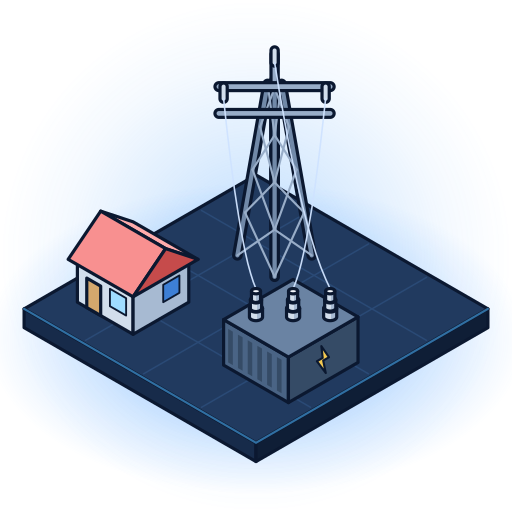
If it holds: challenges Power & minerals
Rising power bills are turning regulators against data centres
AMZN, would come under pressure if this holds BE, would benefit if this holds CEG, would come under pressure if this holds GEV, cuts both ways if this holds GOOGL, would come under pressure if this holds META, would come under pressure if this holds MSFT, would come under pressure if this holds TLN, would come under pressure if this holds VST, would come under pressure if this holdsHigher electricity and capacity prices may be leading regulators, grid operators and legislators to cap what generators earn, push more of the grid's cost onto data centres, or slow their connections.
Not yet assessed
Awaiting evidence Evidence & history -
In no theme: tracked for the companies it names
AI is replacing work companies paid service firms to do
Businesses may be using AI agents for customer support, software maintenance, testing, back-office processing and training they used to buy from outsourcing, consulting and education firms.
Not yet assessed
Awaiting evidence Evidence & history -
In no theme: tracked for the companies it names
Memory shortages are squeezing the margins of device and server makers
Apple's inventory surge and warning on rising memory prices broaden the margin squeeze from PC manufacturers to consumer smartphone makers. Even with record iPhone revenue, Apple's 154% increase in inventory demonstrates that component inflation is tying up working capital and exerting margin pressure across hardware leaders. This reinforces Intel's earlier disclosures of memory-driven margin drag. The main open question is whether device makers can pass rising memory costs on to end buyers without hurting unit volumes.
Assessments are AI-assisted and may be incomplete. Checked Tuesday–Saturday; dates are UTC. A company’s inclusion does not imply positive investment exposure.